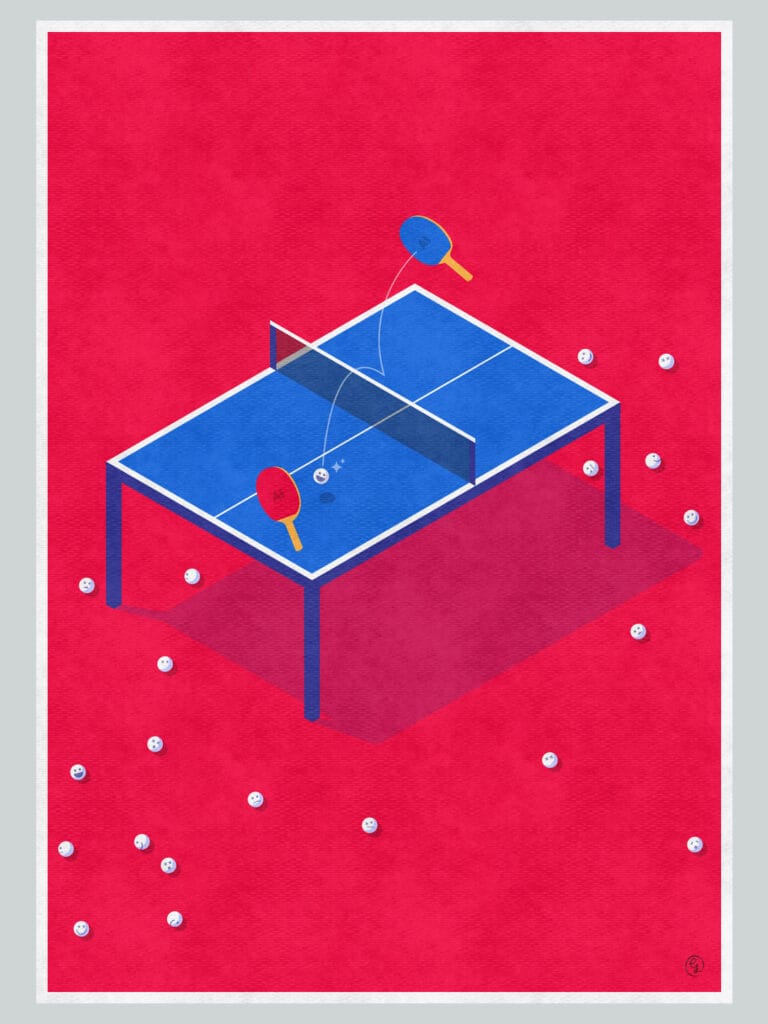
This digital culture poster is part of my Visual Commentary series and explores how humans endlessly feed systems through prompts, attention and interaction. What begins as conversation slowly turns into an infinite loop between people and machines… and machines, machines, machines.
I work as an experience designer. Nowadays, a big part of my job is thinking about how humans interact with technology, shaping the UX between people and systems, trying to make all these new tools feel more natural, useful and human. That also means living surrounded by AI every day.
And honestly, sometimes it feels like the relationship is slowly reversing.
We created these systems to help us think, organize, assist and accelerate… but more and more I feel we are also becoming tools for them. Flesh tools endlessly feeding the machine with prompts, conversations, reactions, thoughts, emotions, references, memories and terabytes of information.
Don’t get me wrong.
I genuinely enjoy these new technologies. A lot.
AI already feels like a strange new companion. A place where I can explore ideas, discuss thoughts, challenge perspectives or simply think out loud with something that actually has the patience to listen and respond. Sometimes it opens doors in my head I would never have reached alone. But the loops are exhausting.
Prompt after prompt.
Window after window.
Conversation after conversation.
Even with memory improving everything, wayfinding, archiving, retrieving and reconnecting information in a truly human and interoperable way still feels incredibly primitive. We are generating oceans of thought while slowly losing the ability to navigate them.
Somewhere in that endless rally between humans and machines, something strange starts happening.
You stop knowing if you are using the system… or training yourself to think at its rhythm.
That feeling is what led me to draw this piece.
“Prompt Pong” is not really about artificial intelligence. It’s about us. About our attention becoming fuel, perhaps even more aggressively than during the social media attention economy era.
Do you feel the same?